
You brush your child’s teeth, remind them to spit, try to keep the bedtime routine moving, and still wonder if it’s enough. That feeling is common. A cleaning every few months helps, but most oral health happens at home, in the small habits that repeat every morning and every night. The gap between appointments is where cavities begin, gums get irritated, and tiny problems either stay small or turn into something more painful and expensive. For families looking for guidance from a dentist in Rose Garden San Jose, these daily routines matter more than most people realize.
A family dentist can treat decay, clean plaque away, and catch trouble early, but no office visit can replace what happens in your bathroom sink each day. At-home dental habits between visits shape how much plaque builds up, how strong enamel stays, and how comfortable children feel with oral care as they grow. Those habits matter for adults too, especially when stress, busy schedules, and sugary snacks start crowding out basic routines.
Daily home dental care sets the pace for oral health
Teeth do not get a fresh start on the day of an appointment. Plaque forms constantly. If it is not brushed and flossed away, it hardens into tartar that cannot be removed with a toothbrush alone. According to the CDC’s oral health overview, oral health is closely tied to overall health, which means home routines are doing more than protecting a smile.
You see the effects in ordinary ways. A child skips brushing well for a week, then starts complaining that cold juice hurts. An adult falls asleep without flossing night after night, then notices bleeding gums and bad breath. These are not dramatic moments, but they add up. The mouth responds to consistency, not good intentions.
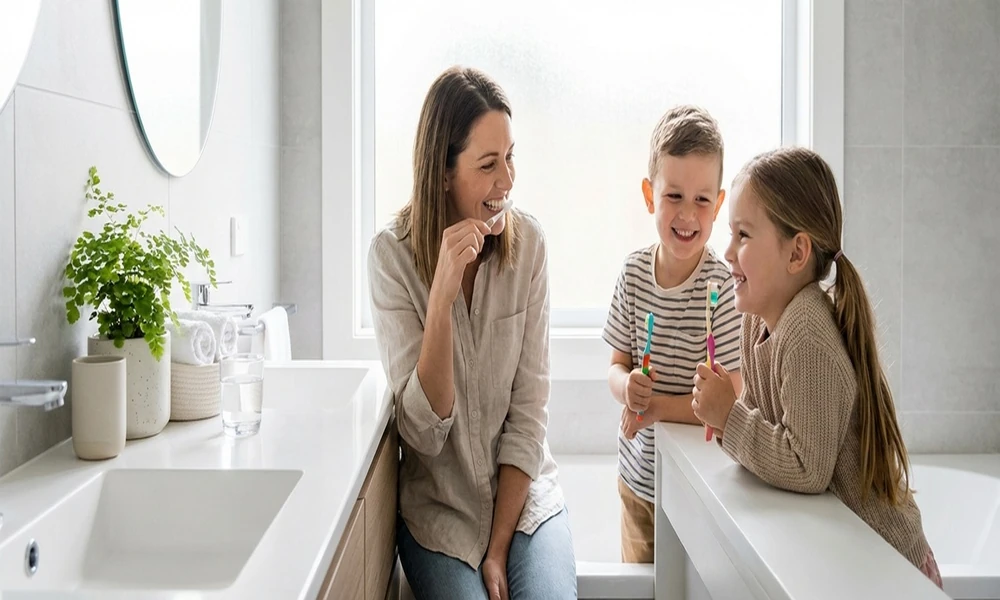
Children learn this early. If brushing is rushed, optional, or treated like a fight, they absorb that. If it is calm, expected, and part of family life, they absorb that too. The lesson is bigger than technique. They learn whether oral care is basic self care or something to ignore until pain forces attention.
Habits learned at home protect more than teeth
The strongest reason home routines matter is not perfection. It is prevention. Regular brushing with fluoride toothpaste, daily flossing, and smart snack choices lower the risk of cavities and gum problems. The National Institute of Dental and Craniofacial Research explains that brushing twice a day and cleaning between teeth are core parts of oral hygiene, not extras for people with more time.
When those habits are weak, the cost is not just clinical. A child with tooth pain may struggle to eat, sleep, or focus at school. A parent may end up juggling an urgent dental visit, missed work, and an unexpected bill. An adult who avoids care because of embarrassment often waits until treatment becomes larger than it needed to be. That is the hard part. Small lapses feel harmless in the moment, but they often show up later as stress.
Home oral care habits also shape confidence. Kids who are used to brushing and flossing tend to feel less anxious during checkups because the process is familiar. Adults who stay on top of daily care often need less invasive treatment over time. The routine at home makes the visit easier, and the visit reinforces the routine at home.
Family routines influence brushing, flossing, and food choices
Most families do not struggle because they do not care. They struggle because evenings get chaotic, mornings run late, and sugar is everywhere. Juice boxes, crackers, sports drinks, sticky fruit snacks, and grazing all day can feed the bacteria that cause decay. If brushing happens quickly and flossing rarely happens at all, those foods have more time to do damage.
This is where a family dental care routine becomes practical, not idealistic. Set a brushing time that is tied to something fixed, like pajamas or breakfast. Keep floss picks where they are easy to grab. Use a timer or a song for two minutes. For younger children, brushing often needs supervision longer than many parents expect. For teens, privacy does not always mean consistency, so quiet check ins still help.
If someone in the family wears braces, has dry mouth, gets frequent cavities, or takes medicine that affects saliva, home care matters even more. These are the situations where “good enough” can stop being enough.
Home care and professional dental visits do different jobs
| Home Habit | What It Helps Prevent | What a Dental Visit Adds |
|---|---|---|
| Brushing twice a day with fluoride toothpaste | Plaque buildup, early enamel damage, bad breath | Checks for decay that is not visible at home |
| Daily flossing or cleaning between teeth | Gum irritation, cavities between teeth | Removes tartar from areas home tools miss |
| Limiting sugary drinks and frequent snacking | Acid attacks that weaken enamel | Reviews risk factors and signs of diet related damage |
| Watching for pain, bleeding, or sensitivity | Delays in catching a problem early | Diagnoses the cause and treats it before it worsens |
That difference matters. Home care controls the daily conditions in the mouth. Professional care finds what is developing under the surface and treats what home routines cannot fix. You need both. For broad, reliable guidance on everyday care and common conditions, MedlinePlus dental health resources is a useful place to start.
Simple actions make dental habits stick between visits
Build the routine around existing habits. Add brushing to moments that already happen every day, like after breakfast and right before bed. Children do better when the order stays the same. Adults do too. A routine you can repeat beats a perfect plan you cannot keep.
Make the tools easy to use. Keep toothbrushes visible, replace them on time, and choose fluoride toothpaste your child will tolerate. If string floss leads to a nightly battle, use floss picks or other dentist approved tools. Removing friction is often what turns a good intention into a real habit.
Notice small warning signs early. Bleeding gums, white spots on teeth, sensitivity, ongoing bad breath, and food getting stuck in the same place are all worth attention. Do not wait for obvious pain. Early problems are usually easier and less costly to treat with a general dentist.
Steady home habits make every dental visit more effective
The goal is not to create a perfect routine or to feel guilty when life gets messy. The goal is to give your teeth and your child’s teeth a steady baseline of care between appointments. That is why dental habits learned at home matter between visits. They lower risk, reduce stress, and make professional care work better.
If your family’s routine has slipped, start small and make it regular. A trusted family dentist can help you build habits that fit real life and catch problems before they grow.