
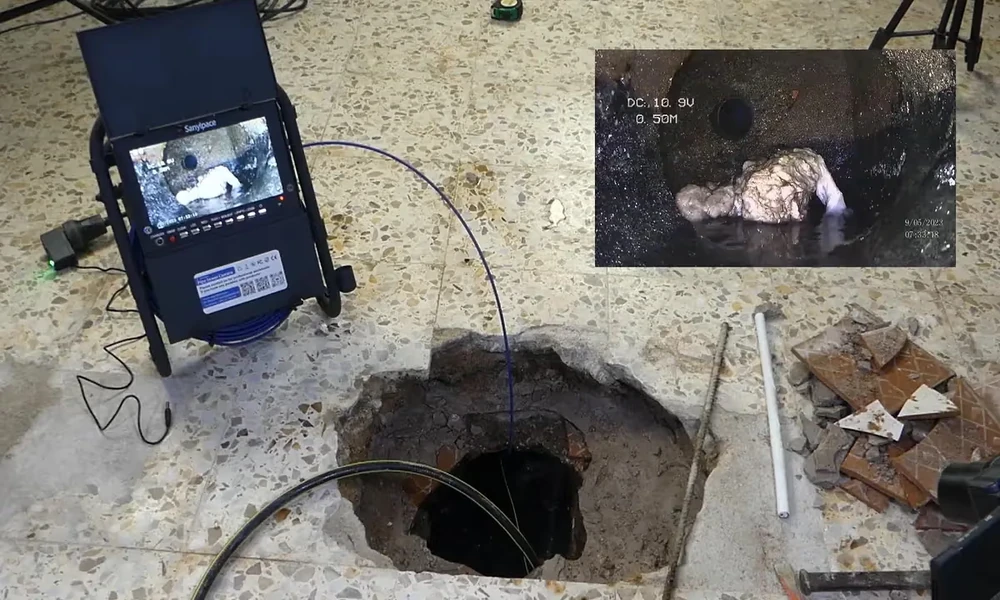
Every house has one pipe that almost nobody has ever seen. It leaves through the basement wall or slab, runs under the yard, and joins the city main somewhere near the street. Everything you flush, rinse or drain travels through it, and in most Indiana cities the homeowner owns that line all the way to the connection, even the stretch buried beneath the sidewalk. When it fails, the first sign is usually water coming up a floor drain at the worst possible moment.
The good news is that this pipe no longer has to stay a mystery. A small waterproof camera on a flexible cable can travel its full length and show, in real time, exactly what shape it is in.
For homeowners who want that footage explained rather than just recorded, a plumber in La Port with camera equipment is the place to start. GoodMan Plumbing, licensed on both sides of the Indiana and Michigan line, runs drain camera inspections, rooter work and sewer line repair out of offices in La Porte and Granger, and the veteran owned crew quotes its work up front before anything gets dug.
Why Old Neighborhoods Hide the Most Surprises
The age of a house tells you a lot about what is underground. Homes built before the middle of the last century often went in with clay tile laterals, laid in short sections with joints every few feet. Cast iron followed in many houses, especially for the stretch inside and just outside the foundation. A stubborn minority from the postwar building boom used Orangeburg, a pipe made of tar soaked wood fiber that softens and deforms with age. Newer construction mostly uses PVC, which holds up far better but still depends on how carefully it was bedded.
Add decades of mature street trees, freeze and thaw cycles, and sandy glacial ground that can shift under heavy loads, and you get a mix of conditions that only a camera can sort out. Two houses on the same block, built ten years apart, can have completely different stories beneath their lawns.
Six Things That Show Up on the Screen
Roots finding their way in
Roots are the most common discovery in older clay lines. They do not crack sound pipe on their own. Instead they find a joint that has opened slightly, sense the moisture and nutrients inside, and grow through in fine hairlike mats that catch paper and grease. A camera shows whether you are looking at a few strands that cutting can clear or a joint so packed that roots will return within months.
Offset joints
When one section of pipe shifts up, down or sideways against the next, the camera shows a visible ledge. Small offsets mostly snag debris. Larger ones can stop the cable entirely and usually point to settling soil or old tree roots lifting the line.
A belly in the line
A belly is a sag where the pipe dips and holds standing water. On screen, the lens slips under water for a stretch and then climbs back out. Waste slows down in that low spot, solids settle, and the result is a drain that clogs again no matter how often it is cleared.
Scale and corrosion in cast iron
Old cast iron rusts from the inside, building rough, lumpy scale that narrows the pipe and grabs anything passing through. Severe cases show channels worn along the bottom where the metal has thinned.
Crushed or deformed pipe
Orangeburg tends to flatten into an oval, and clay can crack or collapse under weight. A collapse shows as a pile of soil or broken shards blocking the view, and it is the one finding that rarely has a quick fix.
Grease and buildup
Not every problem is structural. Sometimes the pipe itself is fine and the camera simply reveals years of hardened grease and soap coating its walls, which proper cleaning can largely remove.
Moments When the Footage Pays for Itself
Camera inspection is not something most homes need every year, but certain situations make it worth scheduling.
- Before buying an older home, since a standard home inspection usually stops at the visible plumbing and never sees the lateral.
- After the same drain backs up more than once in a short stretch, which suggests a pipe problem rather than a single clog.
- When a mature tree stands between the house and the street, especially willows, silver maples or poplars.
- Before finishing a basement, so you are not tearing out new flooring later to reach a failing line.
- After a heavy rain brings water up through a floor drain, a sign that the lateral or the connection may be compromised.
From Diagnosis to Repair
The value of seeing the pipe is that it changes the repair conversation. A short root problem might only need mechanical cutting or hydro jetting followed by periodic maintenance. A single bad section can often be dug up and replaced on its own, a spot repair that costs far less than a full replacement. Lines with scattered cracks but good overall shape may be candidates for trenchless lining, where a resin coated sleeve is cured inside the old pipe to create a new one within it. Collapsed or badly bellied lines usually need excavation, because no liner can correct a sag or pass through a crushed section.
A good camera report also records the depth and location of problems, often with a locator that traces the camera head from the surface. That means any digging happens in the right spot instead of across half the yard.
Why the Line Matters Beyond Your Own Basement
Failing laterals do not only threaten the house they serve. Cracks and open joints let groundwater and rainwater seep into the sewer system, adding flow that treatment plants were never designed to handle. Research prepared with support from the U.S. Environmental Protection Agency on rehabilitating private lateral sewers points to defective laterals as a significant contributor to sewer overflows and basement backups across the country. That is part of why many cities now ask homeowners to keep downspouts and sump pumps off the sanitary sewer entirely.
For the homeowner, the takeaway is simpler. The pipe you cannot see is one of the most expensive parts of the house to ignore and one of the cheapest to understand. A few minutes of footage can turn a vague worry about slow drains into a clear picture, whether that picture shows a clean line you can stop thinking about or a problem you can fix on your own schedule instead of during the next backup.